Listen up. Distracted driving is an issue and will remain one as younger generations grow up with a cell phone always at their fingertips. The graph below, created by the National Highway Traffic Safety Administration (NHTSA) shows that the number of drivers who use an electronic device is going down. 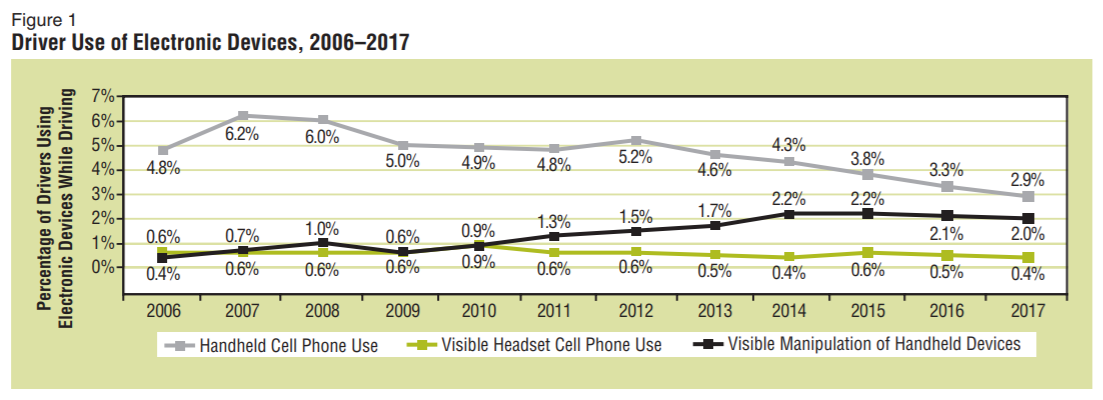
In 2016, 456 people died in a distracted by cell-phone related car crash. When it comes to college-aged distracted drivers (20-29), 898 were involved in a fatal car crash making up 28% of all distracted driving related fatal crashes. Why is this you may ask? Well I did some digging.
80% of college students admit to texting and driving, even though they are well aware of the risks associated with the risky driving behavior. The study goes on to explain that these numbers are so high because millennials feel the need to always be connected and that they display impulsive tendencies.
Many young adults, especially men, obtain an “everybody but me” mentality, meaning they know the dangers of engaging in risky driving behaviors, yet still do so because they believe they are better at texting and driving than others.
Eventually, using your cell-phone while driving will catch up to you.
It’s not if, it’s when. And you may not be the one at fault. According to NHTSA, during daylight hours, approximately 481,000 drivers are using cell phones while driving (2016).
The good news is, it doesn’t have to end this way! You can choose not to drive distracted. Be the change you want to see (#classic).
The month of April is Distracted Driving Awareness Month. Taking a stand against risky driving behaviors can show your peers and others that you are committed to a safe driving environment (trust me, they’ll appreciate that when they are in the car with you!)
Last thing to remember – distracted driving is not just texting. Visual, manual, and cognitive distractions are all dangerous distractions for a driver. This includes eating, talking on the phone, putting on makeup, and heightened emotions. Pull over safely if something needs to be dealt with immediately.
Multitasking is good for chores and homework, but never good when it comes to driving! In 2016 alone, 3,450 people died in a distracted driving related crash, and an additional 391,000 people were injured. Don’t become part of a statistic. Tell your friends and family that you are “omw” before you leave the driveway.
Always remember, #ItCanWait!
 Madison Graham is a student at the University of Texas obtaining her master’s degree in Community and Regional Planning. She loves all things transportation, and her focuses include bicycle and pedestrian accessibility and safety.
Leave a Reply